
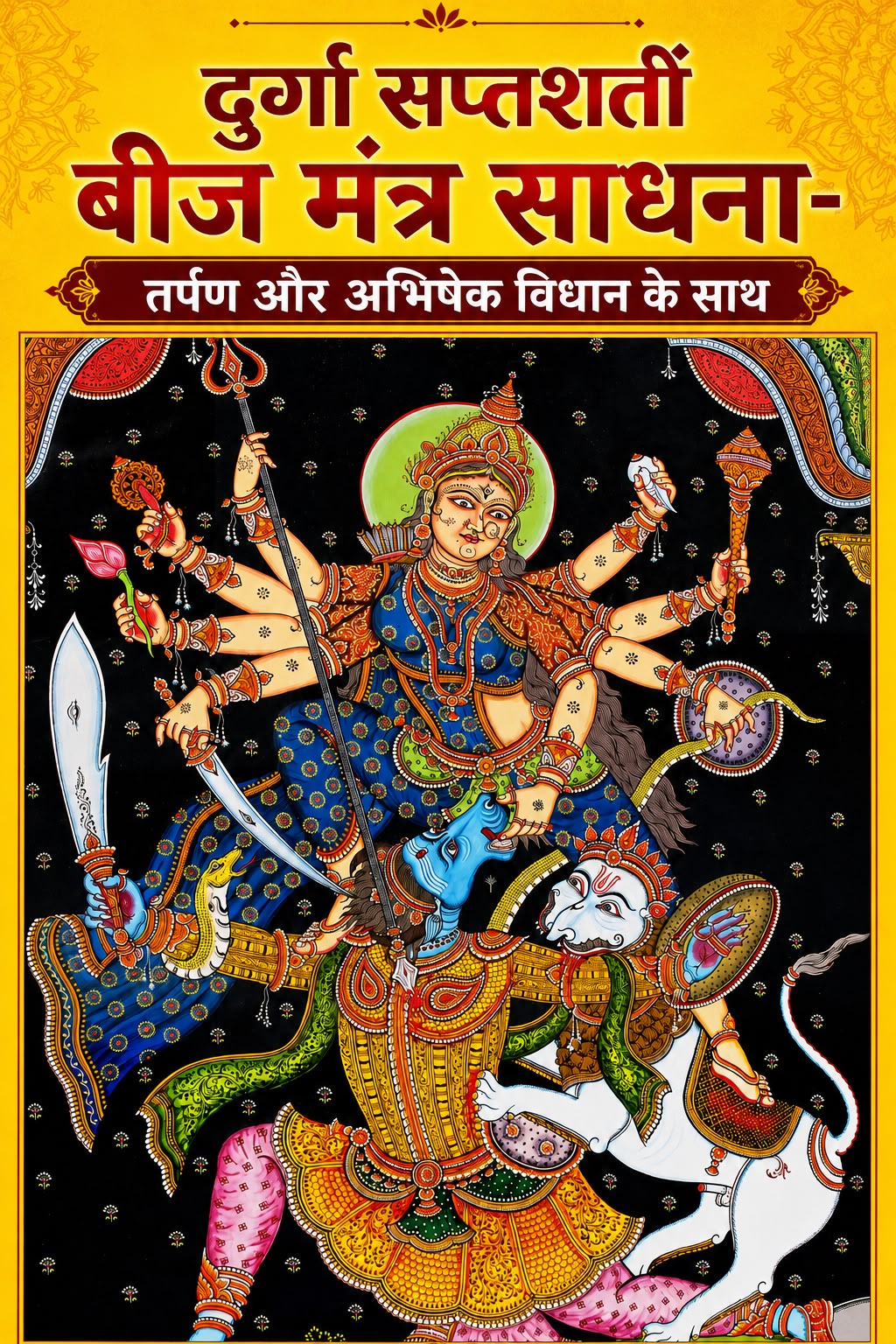

ॐ नमो गुरु आदेश श्री मात्रे नमः

Guruadesh: Purpose. Practice. Purity. Patience. Perseverance. Paramukti!

Guruadesh is not for the curious. It is for those claimed by the call to liberation, through Tantra sadhana into Advaita, under Shree Pratik Ji. Below, two sacred instruments of the path are set out clearly and fully, without reducing the Mother to spectacle.

Upcoming Events

Sacred offerings

Yantras on the path

Two pillars of instrumentality in the Guruadesh communion: the sovereign geometry of Śrī Yantra, and the arresting stillness of Bagalāmukhī. Both are taught only with lineage care, never as standalone consumer products.

Sri Yantra diagram: nested triangles and lotus enclosure as sacred geometry of Śrī Vidya.

Diagram for orientation; consecrated form and practice are received in person.

Sri Vidya

Sri Yantra: geometry of the Mother as cosmos

श्रीं त्रिपुरसुन्दर्यै नमः

Salutations to Tripura Sundari, whose body is the universe in seed form.

The Sri Yantra is not a talisman to hang for luck. In this lineage it is treated as a living map of consciousness: nested triangles, the circuit of the nine enclosures (navāvaraṇa), and the still point where name and form resolve into silence. Every line and lotus is placed within a method that ties worship to mantra, breath, and the gradual ripening of the sādhaka.

Under Shree Pratik Ji, work with the Sri Yantra sits inside the wider architecture of Shri Vidya: correct sequence, restraint, and the humility to be corrected. The diagram disciplines the mind into one-pointed offering rather than scattered curiosity. What looks like geometry from the outside is, for the prepared heart, a doorway into ordered surrender to the Primordial Mother.

What this offering holds
  • Instruction on how the yantra is read inwardly: from outer gate to inner bindu, and how that mirrors stages of inner life rather than mere symbolism.
  • Alignment with mantra, nyāsa where appropriate to stage, and the ethical frame of Kaula and Urdhvamnaya practice so that power never outpaces purity.
  • Integration with daily anuṣṭhāna already given in the communion, so the yantra does not float as a separate hobby but roots in vow, seva, and guru-ādeśa.
Highlights
  • Precision in drawing, placement, and respect for consecrated form, taught stepwise rather than rushed.
  • Emphasis on śraddhā and śāstra-backed understanding before intensity of practice.
  • Guardrails for householders and serious seekers alike: sustainable pace, clear boundaries, and review within the sangha.
  • Connection to the Śrī Vidyā view that the Mother is both immanent beauty and transcendent silence, never reduced to superstition.
Who may approach
  • Those already admitted to the Spiritual Communion, or seekers moving through review, who receive explicit direction when adhikāra aligns.
  • Practitioners willing to treat the yantra as sacred obligation, not decoration or status.
  • Anyone who understands that public pages cannot replace oral teaching; depth unfolds in person and in the protected space of the path.
Guidelines
  • No independent purchase of ritual kits or internet "initiations" as a substitute for lineage instruction.
  • Women’s practice continues according to the communion’s humane norms; specific ritual details are given privately, not debated in public forums.
  • Photography, social sharing of consecrated forms, and competitive display are discouraged; the work is inward and quiet.

On the path

Timing, depth, and personal schedule for Sri Yantra-related practice are communicated within the communion after review, not through open registration dates.

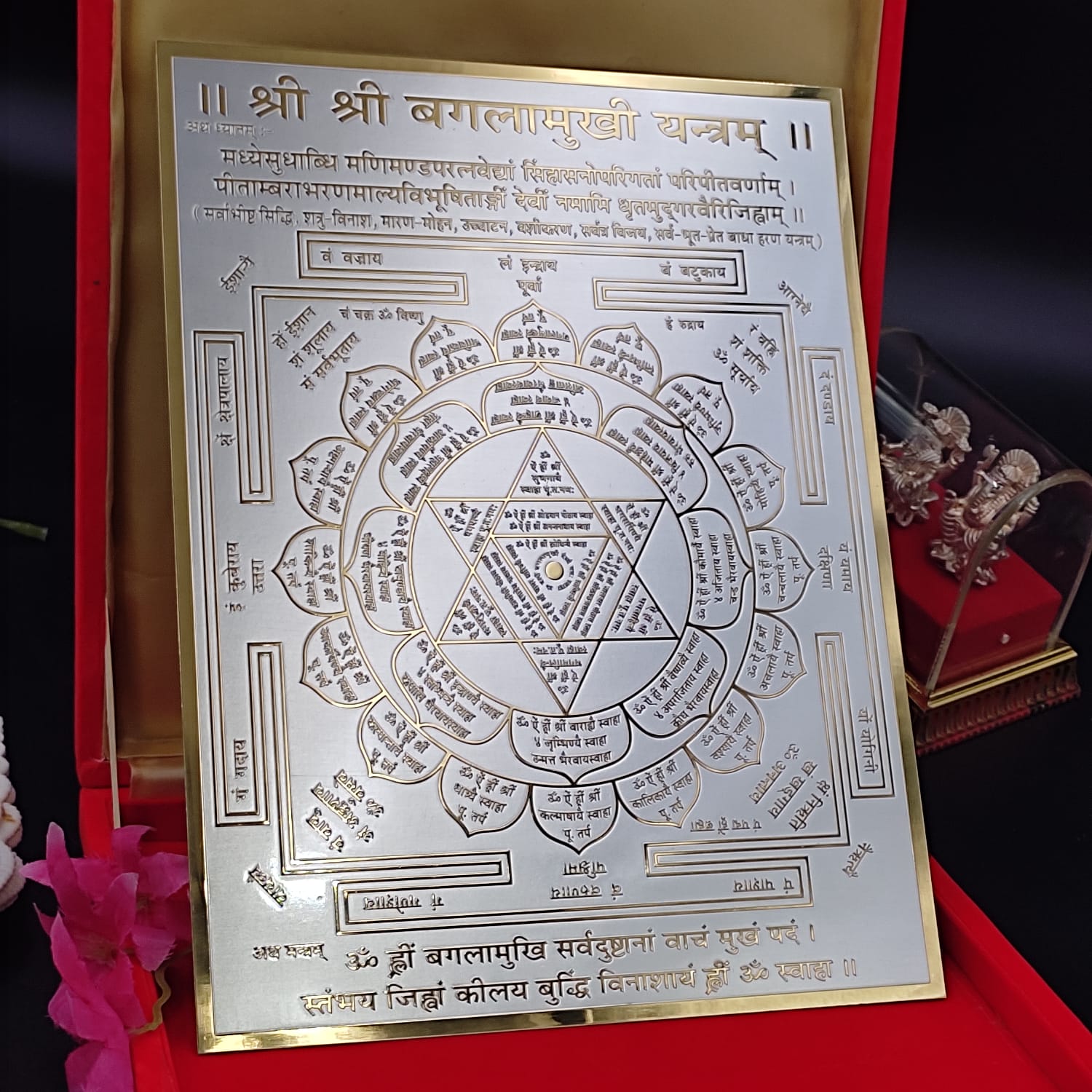
Bagalāmukhī yantra diagram associated with the eighth Mahāvidyā.

Diagram for orientation; consecrated form and practice are received in person.

Mahāvidyā

Bagalāmukhī Yantra: stillness that arrests harm

ॐ ह्रीं बगलामुख्यै नमः

The seed and name of the Goddess who stills harmful speech and confusion. Extended mantra, nyāsa, and ritual are taught only under direct guidance in the communion.

Bagalāmukhī is among the Mahāvidyās: fierce compassion that stops what destroys dharma in speech, thought, and circumstance. Her yantra is approached with gravity. It is not a weapon for ego battles or worldly rivalry, but a sacred instrument for stopping harm, inner and outer, when the guru sees fit and the sādhaka’s motive is clean.

At Guruadesh, Bagalāmukhī yantra sādhanā is folded into the same fabric as the rest of the path: nīti first, then śakti. Stambhana (arresting negative force) is taught only when character, stability, and surrender to guru-ādeśa are already visible. The Mother’s stillness is not entertainment; it is medicine for situations that ordinary effort cannot untangle.

What this offering holds
  • Clear teaching on the deity’s nature: speech frozen into truth, obstacles to practice paralysed so that clarity can return, never used for petty control.
  • Ritual and mantra protocol suited to stage, always nested under broader Tantra and Advaita orientation so power serves liberation, not bondage.
  • Pastoral care around fear, anger, and revenge fantasy; anything unwholesome is turned back into sādhanā of the heart before technique advances.
Highlights
  • Structured preparation so the sādhaka does not confuse intensity with authenticity.
  • Integration with Śrī Vidyā worldview where Bagalāmukhī serves the same ultimate non-dual truth as Lalitā, seen through a different face of grace.
  • Practical guidance on diet, rhythm, and speech during sensitive phases, aligned with communion discipline.
  • Ongoing check-in so that benefits do not inflate the ego; the goal remains mukti in stillness.
Who may approach
  • Members in good standing within the Spiritual Communion, when the guru authorises this form of work for the situation at hand.
  • Seekers who can hold secrecy, patience, and non-performative practice.
  • Those who have already shown they can receive correction and pause when asked.
Guidelines
  • This path is never offered as a curse, binding, or manipulation of another person’s will.
  • Physical and mental health concerns must be disclosed; some intensities are not suitable for every constitution.
  • All substantive questions about mantra, nyāsa, and timing belong in private instruction, not in public comment or chat speculation.

On the path

Bagalāmukhī-related practice is assigned by context and adhikāra; there is no open "drop-in" calendar on this site. Request to join begins the conversation.

Continue exploring

The Spiritual Communion is the living vessel for everything above: correction, community, and progressive depth.